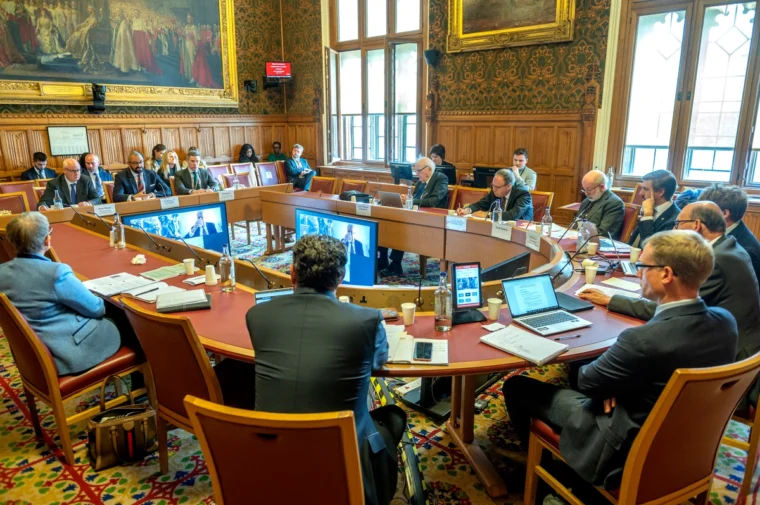
All-Party Parliamentary Group Explained
An All-Party Parliamentary Group (APPG) is an informal, cross-party group in the UK Parliament, made up of Members of the House of Commons and House of Lords who share a common interest in a specific issue, region, or cause. APPGs have no official status within Parliament, but they play a powerful role in shaping debate, building political consensus, and providing a platform for dialogue between Parliamentarians and external stakeholders, such as charities, industry bodies, academics, and campaigners.
Each APPG must include members from more than one political party and be chaired by a sitting MP. Though not allowed to carry out official parliamentary business (like introducing legislation), APPGs can commission reports, hold public events and inquiries, and influence government policy by raising awareness and applying political pressure. Many serve as a launchpad for policy proposals that go on to gain traction with select committees or departments.
APPGs – A Brief History
The concept of cross-party informal groups in Westminster can be traced back to the 1930s, but the structure we recognise today began to take shape in the post-war period. Over time, APPGs grew in number and influence, becoming a recognised forum for engagement between Parliament and civil society. The surge in APPG formation followed the decline of large-scale backbench committees in the 1960s–80s, as MPs sought new collaborative spaces to focus on thematic policy work.
By the 2000s, the number of APPGs had risen sharply, prompting increasing oversight from the Parliamentary Commissioner for Standards. In 2023–24, in response to concerns around lobbying and transparency, Parliament introduced updated APPG rules to clarify secretariat responsibilities, funding disclosures, and operational limits. As of 2024, there are more than 500 registered APPGs covering topics ranging from climate change to knife crime, digital regulation, and global health.
Best practice Contemporary Example of APPG excellence – APPG on Artificial Intelligence
The All-Party Parliamentary Group on Artificial Intelligence (APPG AI) is a highly active group that brings together Parliamentarians, tech experts, academics, and business leaders to explore the implications of AI on society, the economy, and public policy. It has held evidence sessions on AI and mental health, algorithmic bias, and the ethical development of AI systems.
By creating a structured space for informed discussion, APPG AI has helped to ensure that policy conversations around regulation and innovation are well-informed. Its work has contributed to growing momentum behind the government’s national AI strategy and discussions around the Online Safety Act and AI governance.
Gaining real Legislative Impact – APPG on Carbon Monoxide Safety
A compelling example of an APPG making a real legislative difference is the All-Party Parliamentary Carbon Monoxide Group (APPCOG). For years, APPCOG campaigned to improve carbon monoxide detection and awareness across the UK.
In 2019, following a series of reports, evidence sessions, and cross-sector collaboration with charities, gas safety experts, and coroners, APPCOG succeeded in influencing changes to building regulations. This led to new legal requirements mandating carbon monoxide alarms in all rented properties with fuel-burning appliances — a major win for public safety and a tangible outcome of sustained APPG advocacy. The group’s work also helped embed CO safety into wider housing and health policy, demonstrating how consistent pressure, expert evidence-gathering, and effective communication through the APPG model can achieve real-world policy change.
How to set up a New APPG?
All‑Party Parliamentary Groups (APPGs) are informal, cross‑party member-led groups within Parliament that focus on specific policy, regional, or issue‑based interests. Though they have no official status, they play a vital role in bringing together MPs, Peers, and civil society to explore ideas, build consensus, and influence public.
- Hold Your Inaugural Meeting & Register
Following a general election or decision to form a new group, you must convene an inaugural meeting. This meeting elects at least four officers—two of whom must be MPs (including the Chair, who also serves as registered contact), with representation from both government and opposition parties. Within 28 days, use the official APPG registration form to submit:
- Group name (must include “All‑Party Parliamentary Group”)
- Purpose statement (max 50 words)
- Officers’ names, affiliations and roles
- Contact details, reporting year start date, and any external secretariat
- Meet Transparently & Maintain Membership
An APPG must hold at least two formal meetings annually (one being the AGM), each with a quorum of five parliamentarians, including at least one MP. Formal meetings must be advertised a week in advance via the All‑Party Notices, listing speakers and the parliamentary contact. Membership must be open to all MPs and Peers. External (non‑parliamentary) members can join but cannot vote. All external members must be recorded in publicly accessible documents.
- Manage Finances & Declare Benefits
Transparency is key. An APPG must disclose any external funding or in‑kind benefit over £1,500 per source, identifying the provider and value (within financial bands) within 28 days. If requisites are met, groups must also prepare and publish an annual Income & Expenditure Statement at each AGM. Secretariat arrangements must be clearly declared, including the funding source, especially if provided via a third party. Foreign‑government funded secretariat support is prohibited.
- Ensure Transparency in Communications
APPGs must avoid implying official status or confusion with formal Parliamentary committees. Publications and websites must:
- Use the full APPG name and bespoke portcullis emblem
- Carry the standard disclaimer stating they are not official House publications
- Include officer and secretariat contact information
- Provide public access to minutes, meeting records, membership lists, and financial data – stored for at least five years.
- Stay Compliant & Avoid Sanctions
The Registrar and Parliamentary Commissioner for Standards oversee APPG compliance. Failure to follow the rules—including timely registration, financial transparency, or accurate records—may result in removal from the official APPG Register. That would prevent use of the APPG title, emblem, and reserved parliamentary facilities. Complaints can trigger investigations, and chairs bear ultimate responsibility.