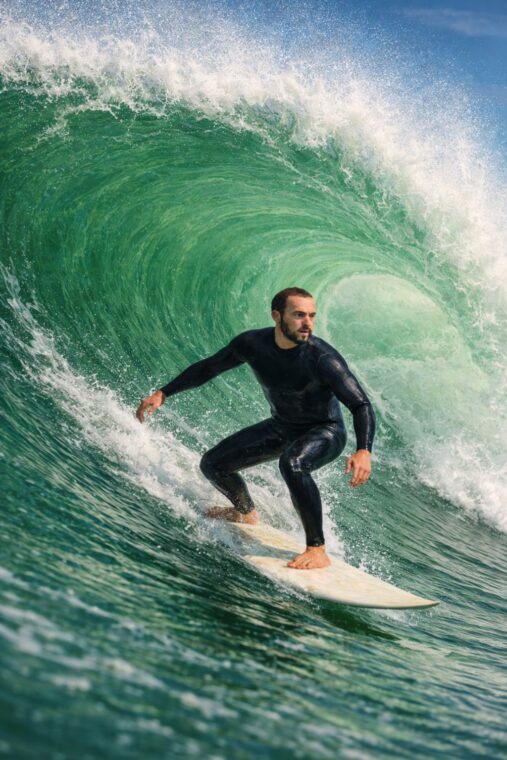
The Green Wave Explained:
When Zac Polanski became leader of the Green Party in September 2025, few expected the shift that followed. His election marked more than a personal win — it signalled a reinvention of the party. Under Polanski, the Greens have embraced a more populist, media-savvy, and socially focused politics.
Since then, Polanski has become the face of a movement that feels newly confident, confrontational, and ambitious. The “Green Wave” he rides is not just ecological — it’s political. It could reshape the British left for years to come.
From Stage to Assembly
Born David Paulden in Salford in 1982, Polanski’s route into politics was anything but traditional. Before stepping into public life, he worked as an actor, hypnotherapist, youth worker, and in hospitality. Those experiences honed his communication skills and empathy — tools he now uses to connect with voters.
He joined the Liberal Democrats in 2015 and stood unsuccessfully for a council seat in Camden, and again for the London Assembly a year later. Disillusioned by the party’s centrism, he famously heckled Jeremy Corbyn over Brexit in 2016, then quit the Lib Dems in 2017, arguing they were “not left-wing enough.”
That same year, he joined the Green Party, beginning a steady rise that would take him to the top.
Rise Through the Ranks
Polanski won a London Assembly seat in 2021, campaigning for universal basic income, housing reform, and climate justice. A year later, he became Deputy Leader. By 2024, he had helped steer the Greens to a record general election, growing their MPs from one to four.
In 2025, his leadership bid centred on an “eco-populist” message — linking green policies to everyday struggles. He called for a wealth tax, fairer distribution of resources, and investment in public services.
This approach reached beyond the Greens’ traditional base. Under Polanski, the party positioned itself as a home for voters disillusioned with Labour’s caution and weary of right-wing populism. His media-ready, assertive style has brought the Greens into the national spotlight.
The Green Surge
Momentum came quickly. Within a month of Polanski’s election, Green Party membership passed 100,000 —(currently 150,000) overtaking both the Conservatives (123,000) and Liberal Democrats (83,174).
“This milestone shows that people are ready for something new,” Polanski said. “The old two-party system is broken. The Green Party is growing because we speak to the real challenges of this moment.”
Polls have echoed that sentiment. In October 2025, YouGov put the Greens at 16%, level with Labour. In the May 2025 local elections, they gained 43 seats, marking their eighth straight year of growth. The party’s national footprint is now broader than ever.
Electoral Success So Far
The Greens’ rise under Polanski is clear and measurable.
- In the 2024 general election, they returned four MPs, proving Green politics can thrive beyond Brighton.
- In the May 2025 county council elections, they gained seats from both Labour and the Conservatives, reaching over 850 councillors across 180 councils.
- They achieved their highest-ever local vote share, showing that the Green Wave is more than hype — it’s changing voting habits across England and Wales.
These wins have laid the groundwork for their next big test: the 2026 local and devolved elections.
Looking Ahead to 2026
All signs suggest that 2026 could be another breakthrough year.
On Thursday, 7 May 2026, voters across England, Wales, and Scotland will go to the polls. Every London borough will be contested — a major opportunity for Polanski, whose appeal among young and urban voters gives the Greens a strong hand against Labour.
In Wales, the party is aiming for its first Senedd Cymru seats. Welsh Green leaders say they are now “within touching distance” of representation. In Scotland, the Greens plan to consolidate their influence within Holyrood’s pro-independence bloc and grow their local presence.
The party’s reach is expanding — from university towns to coastal communities and former industrial heartlands. The postponed county elections in southern England, now scheduled for 2026, could bring new wins in traditionally Conservative areas, where concern about housing and water quality runs deep.
Challenges on the Horizon
Polanski faces a tough balancing act. Green support often peaks in local elections but drops in general contests, where voters tend to choose between Labour and the Conservatives.
Despite record membership, polls show limited trust in the Greens on the economy, defence, and governance. Inside the party, debate continues between those seeking electoral pragmatism and those defending radical principles.
The wider political picture is equally complex. Reform UK’s rise has splintered the vote further. Labour’s slump gives the Greens an opening on the left but also underscores the volatility of modern politics.
Under-50s and the Green Vote
If a general election were held tomorrow and only under-50s could vote, Zac Polanski would be the UK’s next prime minister. That’s the striking conclusion from new YouGov polling that lays bare the generational divide now shaping British politics.
The Green Party is attracting an extraordinary 25% of the vote among under-50s and an even higher 39% among 18 to 24-year-olds. These figures suggest that the so-called “Green Wave” has become not just a political moment but a generational movement.
Labour, by contrast, is struggling to hold onto its younger base. Half of its 2024 voters have now defected, with 18% saying they would back the Greens, 13% the Liberal Democrats, 11% Reform UK, and 5% the Conservatives.
Reform UK continues to lead among the general population with 27% support, particularly dominant among 50 to 64-year-olds, 36% of whom now back Nigel Farage’s party. Yet Reform’s growth may have peaked, polling just below its highs of earlier this year.
The Greens, meanwhile, are still climbing. Since Polanski’s election in September, the party’s national vote share has risen six points to 16% — up from just 6.7% in the 2024 general election. Membership has more than doubled, surpassing 150,000 this week, an unprecedented figure for a party once seen as peripheral.
YouGov’s latest survey places Labour and the Conservatives neck and neck on 17%, with the Liberal Democrats close behind on 15%. The data arrives in the wake of Labour’s bruising defeat in Caerphilly, where the party finished third behind Plaid Cymru and Reform UK. For many within Labour, the warning is clear: the Green Wave is no longer a ripple — it’s a generational tide reshaping the political landscape.
Riding the Wave
Zac Polanski’s story reflects Britain’s political mood in late 2025 — restless and searching for alternatives. His hybrid style — part activist, part communicator — has given the Greens something they long lacked: a charismatic leader who can command both a debate stage and a camera lens.
The Green Party’s reinvention is still in motion. Yet as membership climbs, polls tighten, and local power grows, one thing is clear — the Greens are no longer a fringe voice.
For now, Zac Polanski is surfing the wave — and the Green Wave keeps rising.