
Political Showdown: Reform UK, The Greens, Corbyn & Sultana New Party and Labour’s Fight for Survival in 2026
Reform UK’s Ascent
Reform UK continues its meteoric rise—reportedly topping national polls and gaining traction across local elections, signalling substantial challenges ahead for both Labour and the Conservatives.
Governance Challenges
Reform’s rapid expansion from a fringe movement to a serious electoral force has been driven by public dissatisfaction with traditional parties, particularly on issues such as immigration, economic management, and perceived governmental inefficiency.
However, the party’s growing local responsibilities have revealed significant governance and operational challenges. In Kent County Council, widely seen as Reform’s flagship local authority, the leadership has faced criticism over internal infighting, councillor suspensions, and accusations of mismanagement. Despite campaigning on reducing council costs, Kent has proposed a 3.99% council tax increase for 2026–27 to manage budgetary pressures, provoking opposition claims that the party is reneging on election promises. Similar challenges have emerged in Warwickshire County Council, where a 3.89% tax rise and operational growing pains are testing Reform’s credibility. In Lancashire County Council, Reform’s rapid electoral success brought inexperienced councillors into leadership positions, creating early governance strain, while other authorities have reported meeting cancellations and resistance to internal efficiency initiatives.
These issues illustrate that while Reform UK’s national polling strength is impressive, its ability to translate public support into effective local governance is under intense scrutiny. Council-level controversies, particularly around tax rises, service delivery, and internal discipline, create both risks and narratives opponents can exploit, especially in the lead-up to the 2026 local, devolved, and parliamentary elections.
Strategically, these developments make Reform UK a double-edged sword for 2026: their local gains position them as a credible political challenger with potential influence in coalitions, yet visible governance challenges may constrain voter confidence, making it a crucial test of leadership capability and operational readiness ahead of Westminster-level ambitions.
Labour’s Waning Support
Sir Keir Starmer’s Labour Party is experiencing a sharp and sustained drop in public approval, reflecting growing disillusionment with his premiership. Recent polling shows Starmer’s personal popularity has plummeted to some of the worst levels recorded for any UK prime minister in modern times, with net favourability deeply negative and a majority of voters viewing him unfavourably.
This decline has been compounded by a major political scandal involving the appointment of Lord Peter Mandelson — a veteran Labour figure — as UK ambassador to the United States, despite his previously disclosed connections with convicted sex offender Jeffrey Epstein. Revelations from newly released documents and ensuing police investigations have sparked intense political backlash, including the resignation of Starmer’s chief of staff and heightened internal criticism of his leadership judgment. Reports indicate that senior figures within Labour and across the political spectrum have publicly questioned Starmer’s decision-making and urged greater accountability, with some suggesting his position is untenable without a strategic reset.
At the same time, internal Labour dynamics have been strained by the decision to block Andy Burnham — the well-liked Mayor of Greater Manchester — from standing as the Labour candidate in the Gorton & Denton by-election. Public polling suggests that Burnham remains significantly more popular than Starmer nationally, and many voters, including a large share of Labour supporters, believe the party made the wrong choice in preventing his candidacy. In some surveys of Greater Manchester voting intention, Labour support without Burnham has trailed Reform UK, while with Burnham it would be substantially higher — underscoring how his absence could materially increase the risk of Labour losing the seat.
These converging pressures — falling approval ratings, leadership controversies, internal divisions, and high-profile electoral decisions — have contributed to a collapse in Labour’s overall vote share in polls, with Labour registering a fraction of its 2024 general election support. The combined effect is a mood of voter dissatisfaction and strategic uncertainty that risks Labour losing not only the forthcoming by-election but also significant ground to Reform UK, the Greens, and other challengers in the run-up to the 2026 elections unless the party reenergises its leadership and electoral appeal.
Corbyn & Sultana’s “Your Party”: Momentum Meets Organisational Reality
Jeremy Corbyn and Zarah Sultana’s launch of a new left-wing political vehicle — provisionally branded as “Your Party” — initially appeared to offer a compelling outlet for disenchanted progressive voters. Its core platform, centred on public ownership, wealth redistribution, housing justice, and an explicitly pro-Gaza foreign policy stance, resonated strongly with younger voters alienated by Labour’s centrist repositioning under Sir Keir Starmer.
Early polling reflected this enthusiasm. Ipsos research suggested that around 20% of British adults were either “very” or “fairly likely” to consider voting for the party, rising to 33% among 16–34-year-olds, and surging to over 50% if the party were to form an electoral alliance with the Greens. YouGov data similarly indicated that 18% of voters nationally might consider backing the party, with 36% of 18–24-year-olds open to doing so — a level of youth support unmatched by Labour or the Conservatives.
However, developments since the party’s inaugural conference in Autumn 2025 have exposed significant weaknesses that threaten to stall its evolution into a credible electoral force. Persistent reports of internal disorganisation, unclear governance structures, factional disputes, and unresolved questions around candidate selection, local party formation, and compliance infrastructure have undermined confidence among activists, donors, and potential coalition partners. While enthusiasm remains high among politically engaged young voters, many campaign professionals now view the party as movement-heavy but institution-light.
This tension is particularly evident when contrasting Corbyn’s personal appeal with the party’s operational capacity. Among 18–24-year-olds, Corbyn continues to enjoy a positive net approval rating of +18, compared to Starmer’s deeply negative youth score of around –30. Even across the wider electorate, Corbyn’s net favourability (around –35) outperforms Starmer’s (–44), suggesting that his personal brand still carries weight beyond his core base. Yet this popularity has not translated into disciplined local organising, consistent messaging, or a clear electoral strategy for 2026.
By February 2026, the prevailing assessment among political analysts is that Your Party represents a significant disruptive force — but not yet a fully functional electoral machine. Its presence is most likely to fragment the left-wing vote in key contests rather than dominate them outright, indirectly benefiting Reform UK, the Greens, and nationalist parties in devolved elections. Unless the party rapidly professionalises its internal structures and clarifies its electoral objectives, its immediate impact may be felt more in shaping the political agenda and protest vote behaviour than in securing seats.
Implications for 2026 Elections
| Election | Key Impact |
| Senedd (Wales) | Labour faces potential collapse, with Reform and Plaid Cymru poised to exploit proportional representation. A fragmented left—including Corbyn’s new party—could hand advantage to Reform. |
| Scottish Parliament & Local | Immigration concerns amplify Reform’s foothold; but Corbyn’s appeal among young Scots could reshape left alignment, especially if coalition options open. |
| UK Government (Labour) | Starmer’s weakened standing, combined with Corbyn’s appeal and Reform’s rise, raise serious challenges. Labour may struggle to retain traditional voter bases. |
| Left-Wing Realignment | The emergence of The Green Party threatens to splinter Labour. It’s youth appeal (45%) with 18- to 24-year-olds stating they are most likely to vote Green. |
| Coalitions & Negotiations | Multiple left and right players—including Reform, Plaid, Greens, Corbyn’s party—could make coalition building central to government formation in devolved and local bodies. |
The 2026 Electoral Calendar: A Crucial Turning Point
Thursday 26 February 2026 the Gorton & Denton By -Election.
Thursday 7 May 2026 marks a pivotal moment in UK politics:
UK-wide local elections will be held—including all London borough councils, plus a substantial reshuffling of English local authorities due to devolution reforms and postponed polls.
Scottish Parliament elections are scheduled on the same day, with a possible extension to 4 June 2026 if delayed by royal proclamation.
The Senedd election in Wales is also set for 7 May 2026, ushering in an expanded 96-member body, new constituencies, and a simplified single-party ballot system.
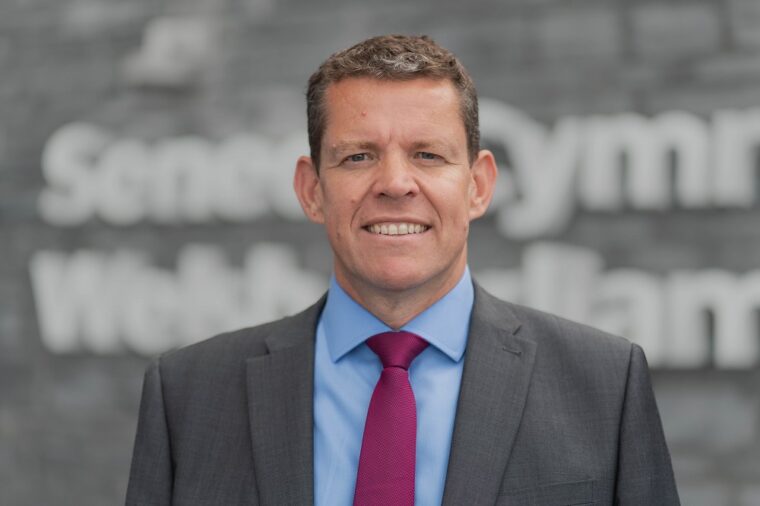
Changes in Welsh Devolved Elections
The 2026 Senedd vote represents the largest overhaul in 25 years:
Expands from 60 to 96 MSs
16 constituencies, each electing six MSs via closed-list proportional D’Hondt
Term length reduces to four years, with all candidates required to live in
English Local Authority Reorganisation
Major reform has postponed 2025 local elections in nine counties (like East Sussex, Essex, Surrey, etc.) to 2026. This was to align with government devolution and structural changes.
These elections will now often elect “shadow councillors,” with new structures taking effect by 2028.
Political Currents Ahead of 2026
Reform UK Riding High
Reform continues to shake the political foundations in Wales, threatening both Labour and Conservatives. In the polls, they draw significant support alongside mainstream parties in a four-way race.
Labour’s Dissolution
Starmer’s Labour is faltering:
His favourability sits at –44 (just 24% positive), according to YouGov.
In Wales, Labour polls at around 18%, while Plaid leads at 30% and Reform at 25%—a seismic shift in a former stronghold.
Green Surge:
The Green Party has now got over 180,000 signed up Members, more that the Conservative Party.
Polls reveals that 26% of 18- to 24-year-olds said they would vote for the Greens in early September last year, but this number had increased to 45% as of January 2026.
Swinney’s SNP: Possible Green Alliance ?
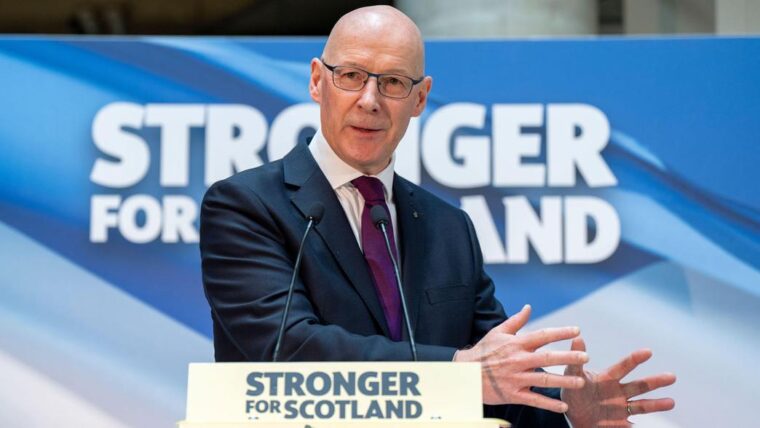
Recent polling paints a complex picture for the SNP ahead of the 2026 Scottish Parliament elections under John Swinney’s leadership. While the party remains ahead in most surveys—averaging 33–34% on the constituency vote and 26–29% on the list vote—its dominance has weakened significantly compared to previous cycles. Analysts suggest the SNP could still secure a pro-independence majority at Holyrood if allied with the Greens, but its position is increasingly threatened by the rapid rise of Reform UK, now polling between 14% and 20%, often surpassing Labour as the second force in Scottish politics. A string of shaky by-election results, internal criticism of Swinney’s cautious strategy, and growing public disillusionment over stalled progress on independence and domestic policy have further unsettled the party. While the SNP retains its status as Scotland’s largest political force, the 2026 race looks set to be one of the most competitive and fragmented in recent history, with voter loyalties shifting and no single party assured of outright control.
What It Means for 2026
| Election Type & Date | Political Implication |
| Senedd Elections – 7 May 2026 | Labour faces potential collapse with Reform and Plaid capitalising; Corbyn’s party may fragment the left vote. |
| Scottish Parliament – 7 May (or by 4 June) 2026 | Reform’s immigration-oriented surge may shift dynamics; youth support for Corbyn’s party could drive new alignments. |
| English Local Elections – 7 May 2026 | Postponements in several counties concentrate elections in one day, likely influencing Reform’s local momentum. |
| Labour’s Instability | Declining favourability and left-wing defection risk—The Green’s surge will splits the left. |
| Coalition Complexities | Multiple left and right players (Labour, Plaid, Reform, The Greens party) raise the likelihood of coalition negotiations in devolved bodies. |

Rise of “Eco Populism”
Since Zack Polanski’s election as Leader of the Green Party of England and Wales in September 2025, the party has experienced a remarkable surge in membership. Under his leadership, membership has increased from approximately 68,500 to over 180,000, making the Greens the third-largest political party in the UK by membership.
This growth reflects Polanski’s ability to energize the party through bold, left-wing policies and effective media engagement.
Green Party in the July 2024 General Election
Second-Place Finishes: In the July 2024 General Election, the Green Party secured second place in 39 constituencies across England and Wales.
Historic Seat Gains: The party achieved a historic milestone by winning four seats in the House of Commons, marking their best performance to date.
Strength in Local Government — Over 800 Councillors Across 170+ Councils:
The Greens already have a substantial presence in local politics. This gives them established networks for canvassing, volunteering, and campaigning, providing organisational advantages over smaller parties or independent candidates.
Implication: Strong infrastructure can help Greens consolidate existing councils, increase voter turnout in friendly wards, and challenge marginal seats held by other parties.
The Green Party enters the 2026 local elections in a strong position:
If trends continue, the Greens are likely to expand their influence significantly in 2026, potentially winning additional councils and consolidating their role as a major political player in local governance across England and Wales.